Assay points.
-
ASBF-TZBTB7-A500
500
-
ASBF-TZBTB7-A10K
10,000
-
ASBF-TZBTB7-A50K
50,000
-
ASBF-TZBTB7-A-HV
100
Assay Principle
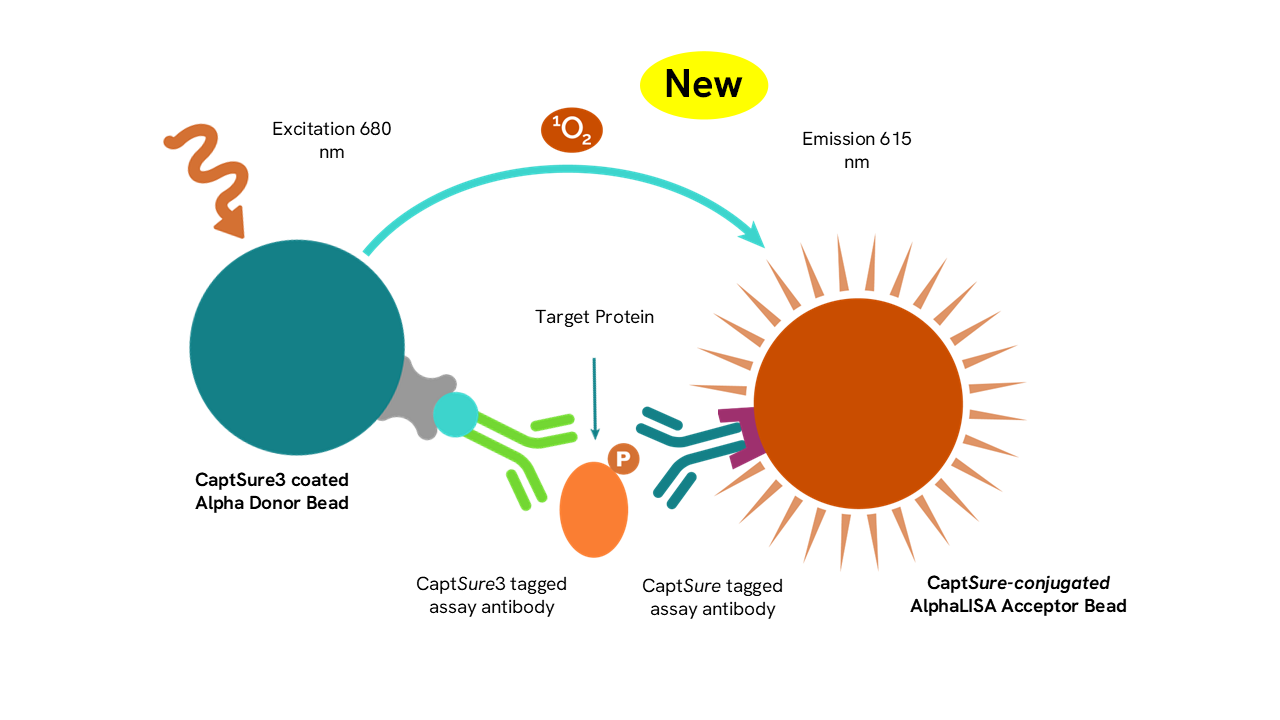
The AlphaLISA™ SureFire® Ultra™ assay enables the rapid and sensitive detection of total and phosphorylated cellular proteins. AlphaLISA™ assays utilize two bead types: Acceptor Beads and Donor Beads. The Acceptor Bead is coated with a proprietary CaptSure™ agent to specifically immobilize the assay specific antibody which is labeled with a CaptSure™ tag. The Donor Bead is coated with streptavidin to capture the biotinylated antibody.
In the presence of a target protein, the two target-specific antibodies bring Donor and Acceptor Beads into close proximity. When the Donor Beads are activated by a laser (680 nm), singlet oxygen is transferred to the Acceptor Bead leading to the production of an Alpha signal. The amount of light emission (615 nm) from the Acceptor Bead is directly proportional to the amount of target protein present in the sample. If an Acceptor Bead is not in close proximity (i.e. 200 nm) of a Donor bead, little to no signal is produced over background.
The assay can be executed in a 1-plate or 2-plate assay protocol (Refer to Manual for more details).
1-plate assay protocol: culturing of cells, treatment, lysis and assay are performed in a single well, enabling miniaturization in high throughput screening programs.
2-plate assay protocol: cells are cultured and treated in a 96-well culture plate and lysates are then transferred into a separate plate for assay. This format allows the evaluation of multiple targets from a single lysate.
Technical Specific Data
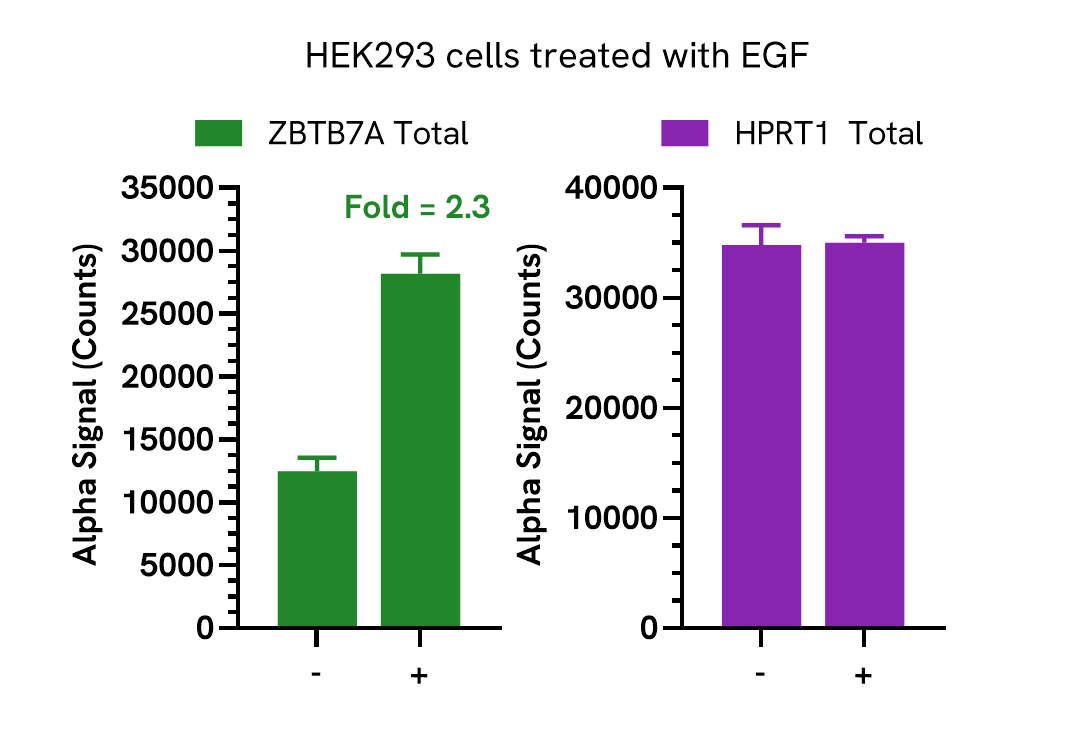
Data obtained with a 2-plate, 2-incubation protocol. HEK293 cells were seeded at 40K cells/well in a 96 well plate and incubated overnight. Cells were left untreated or treated with 1.25 μg/mL EGF for 24 hours in serum free media. Cells were lysed with Lysis Buffer and assayed separately for Total ZBTB7A and HPRT1 using respective SureFire® Biotin Free kits. Equivalent to approximately 4,000 cells/datapoint or 1,000 cells/datapoint for HPRT1.
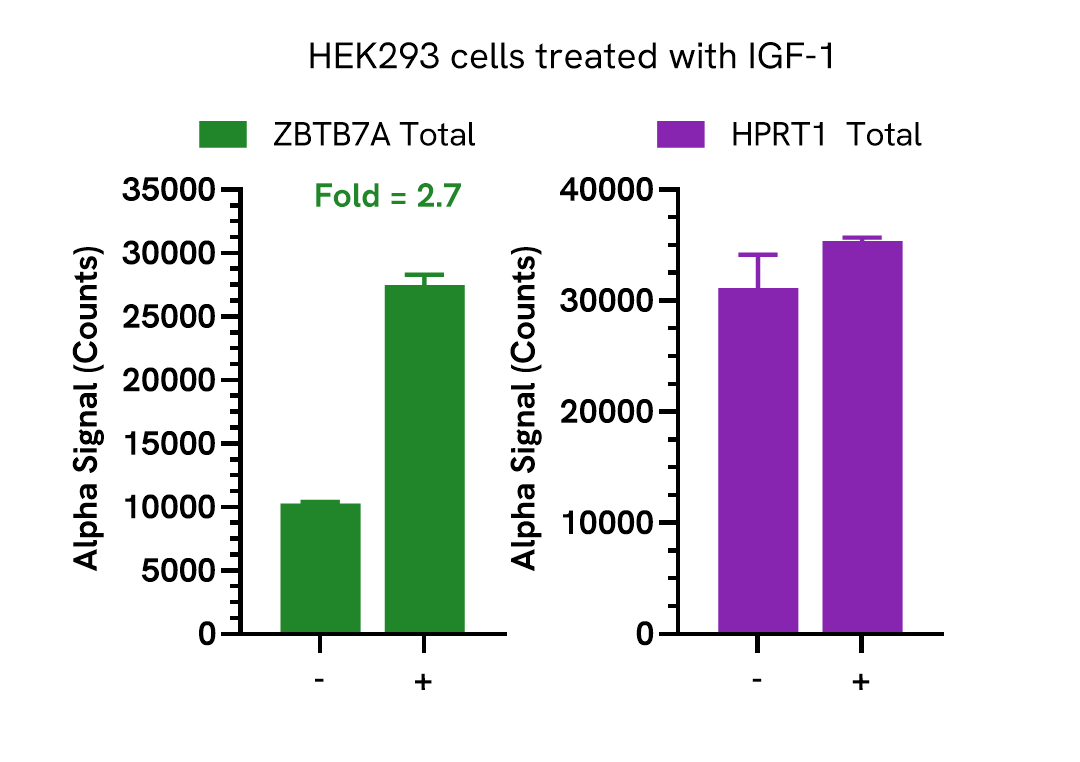
Data obtained with a 2-plate, 2-incubation protocol. HEK293 cells were seeded at 40K cells/well in a 96 well plate and incubated overnight. Cells were left untreated or treated with 1 μg/mL IGF-1 for 24 hours in serum free media. Cells were lysed with Lysis Buffer and assayed separately for Total ZBTB7A and HPRT1 using respective SureFire® Biotin Free kits. Equivalent to approximately 4,000 cells/datapoint or 1,000 cells/datapoint for HPRT1.
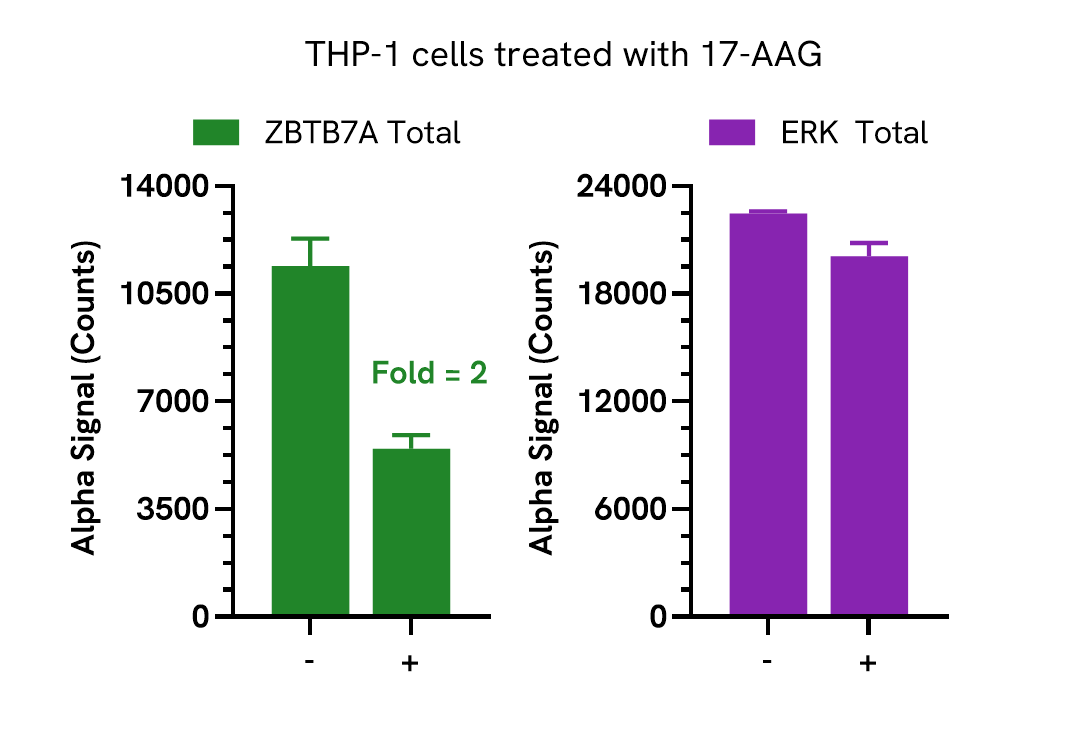
Data obtained with a 2-plate, 2-incubation protocol. THP-1 cells were seeded at 100K cells/well in a 96 well plate. Cells were left untreated or treated with 625 nM 17-AAG for 24 hours. Cells were lysed with Lysis Buffer and assayed separately for Total ZBTB7A and ERK using respective SureFire® Biotin Free kits. Equivalent to approximately 10,000 cells/datapoint.
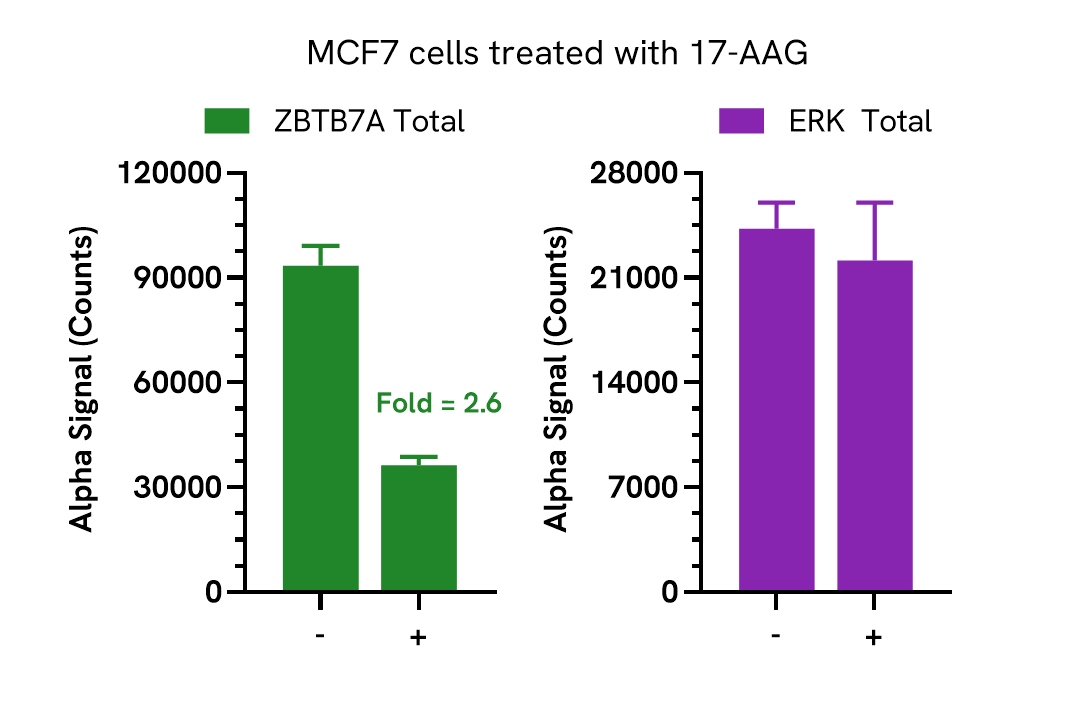
Data obtained with a 2-plate, 2-incubation protocol. MCF7 cells were seeded at 40K cells/well in a 96 well plate and incubated overnight. Cells were left untreated or treated with 1.25 μM 17-AAG for 24 hours. Cells were lysed with Lysis Buffer and assayed separately for Total ZBTB7A and ERK using respective SureFire® Biotin Free kits. Equivalent to approximately 4,000 cells/datapoint.
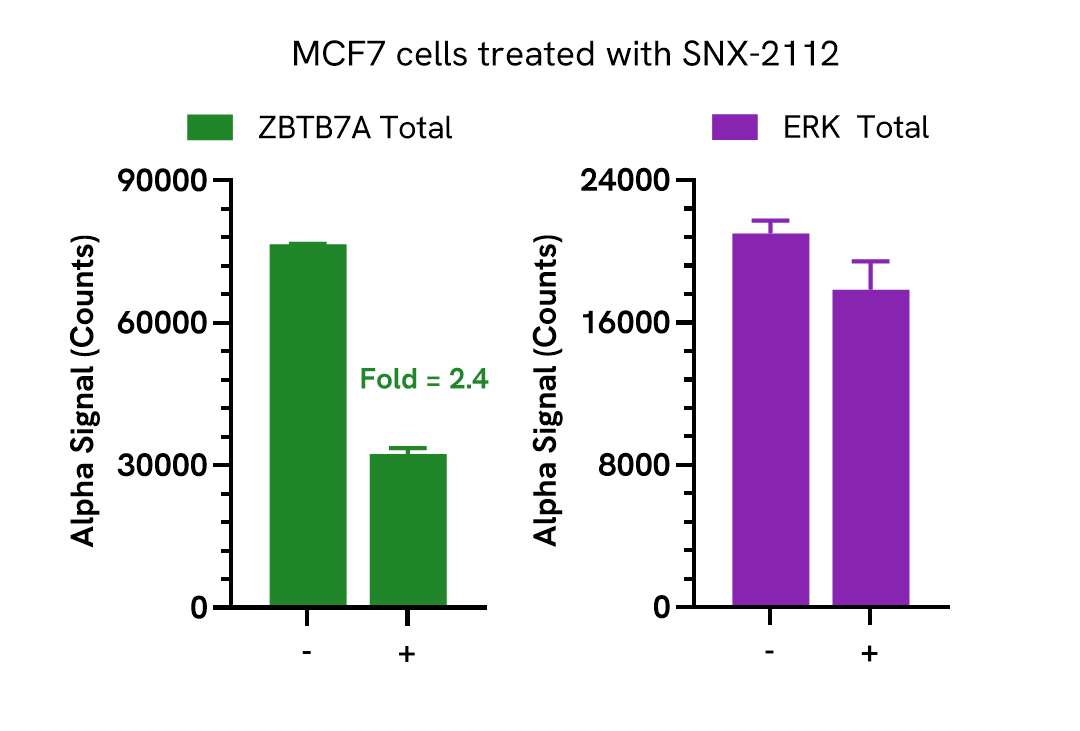
Data obtained with a 2-plate, 2-incubation protocol. MCF7 cells were seeded at 40K cells/well in a 96 well plate and incubated overnight. Cells were left untreated or treated with 1.25 μM SNX-2112 for 24 hours. Cells were lysed with Lysis Buffer and assayed separately for Total ZBTB7A and ERK using respective SureFire® Biotin Free kits. Equivalent to approximately 4,000 cells/datapoint.
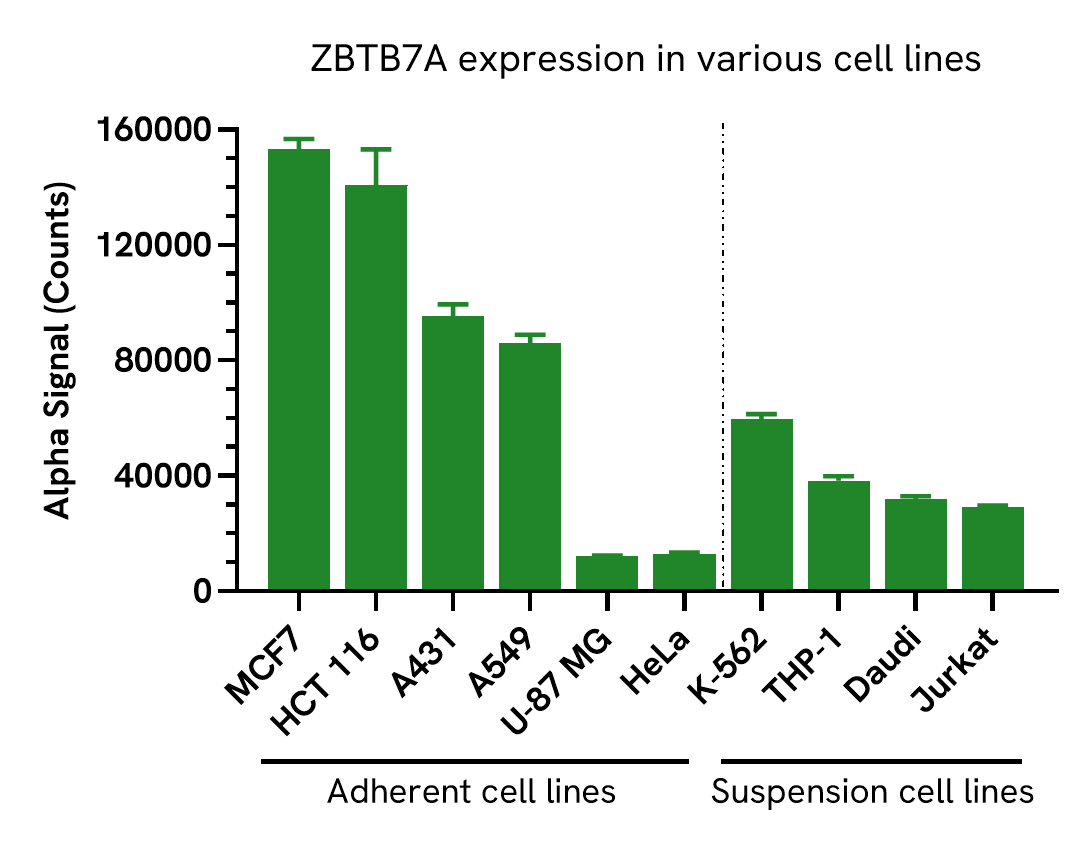
Data obtained from measurement of ZBTB7A Total in various cell types lysed with Lysis Buffer. Equivalent to approximately 5,000 cells/datapoint for adherent cells or 4,000 cells/datapoint for suspension cells.
Manuals & downloads.
-
PDF
-
PDF
Detection Kit Manual
-
Tech Spec
Technical Data Sheet
Safety Data Sheets
-
Safety Data Sheet (SDS)
Safety Data Sheet EU-EN
-
Safety Data Sheet (SDS)
Safety Data Sheet US