• Poster

    Poster

    Next-generation SureFire® Ultra™ assays measuring cell proteins in human whole blood – SLAS 2026

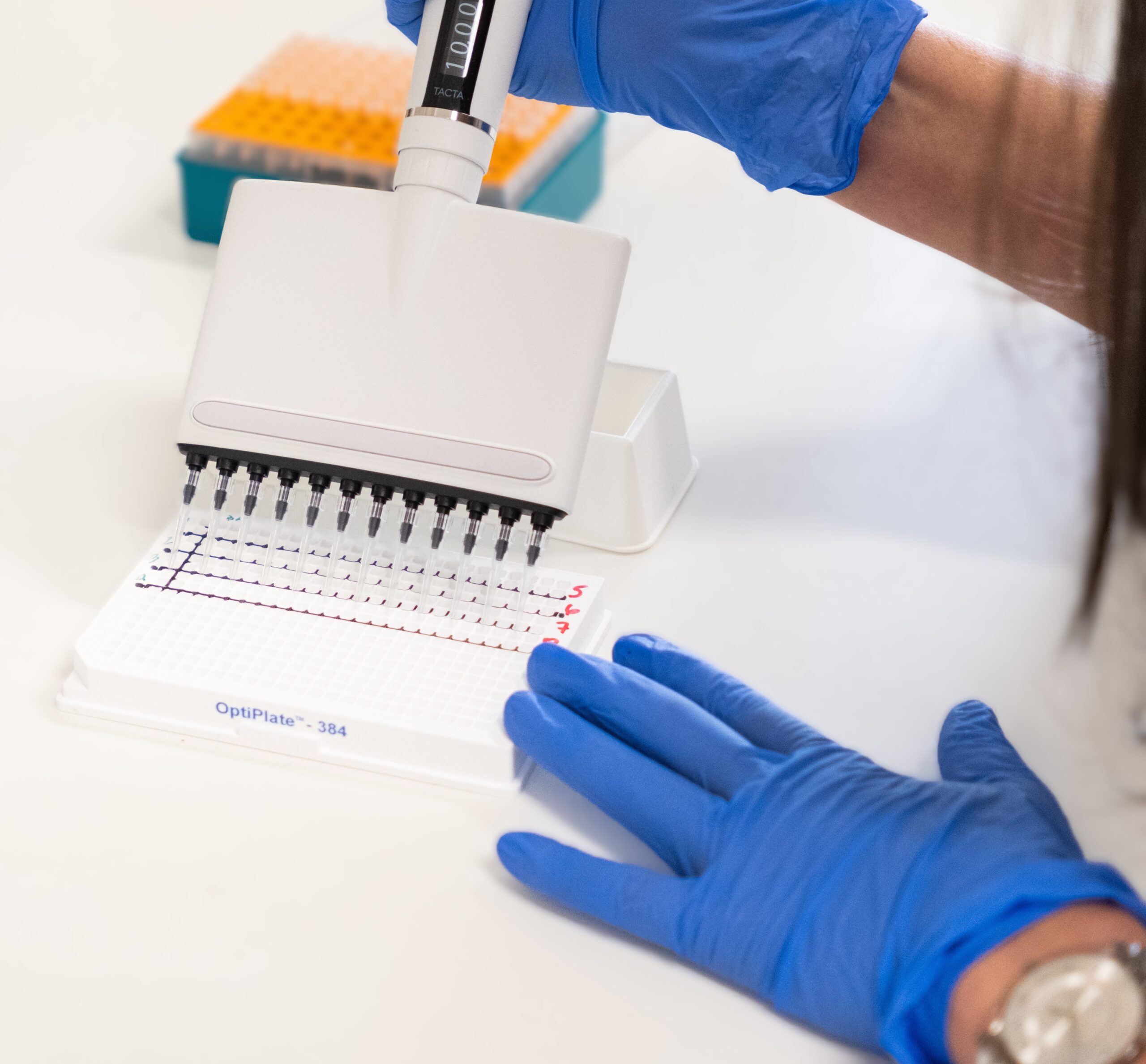
    SureFire® Ultra™ technology is well known for measuring cellular targets in ‘endogenous’ cell systems, often for high throughput screening. • Translational research is increasingly seeking highly sensitive technologies able to detect target proteins in clinically relevant matrices with minimal sample preparation. • From immortalised cell lines to pluripotent stem cells to microglia to PBMCs to primary macrophages to tissues – SureFire® is helping bridge basic science with clinical applications. • We have now expanded this to detection of cellular proteins in human whole blood - arguably the most complex and challenging matrix of all. • Here-in is described a best practice workflow that showcases the sensitivity, specificity and simplicity of SureFire® assay technology for measuring various intracellular target proteins in human whole blood. SureFire® cell-based assays now measure cellular proteins in human whole blood without the need for cell isolation or washing steps, presenting a powerful alternative to traditional detection methods. The impressive sensitivity demonstrated using whole blood samples highlights its value as a highly differentiated and valuable technology for translational research, well beyond the basic research and screening applications it was originally designed for.
  • Poster

    Poster

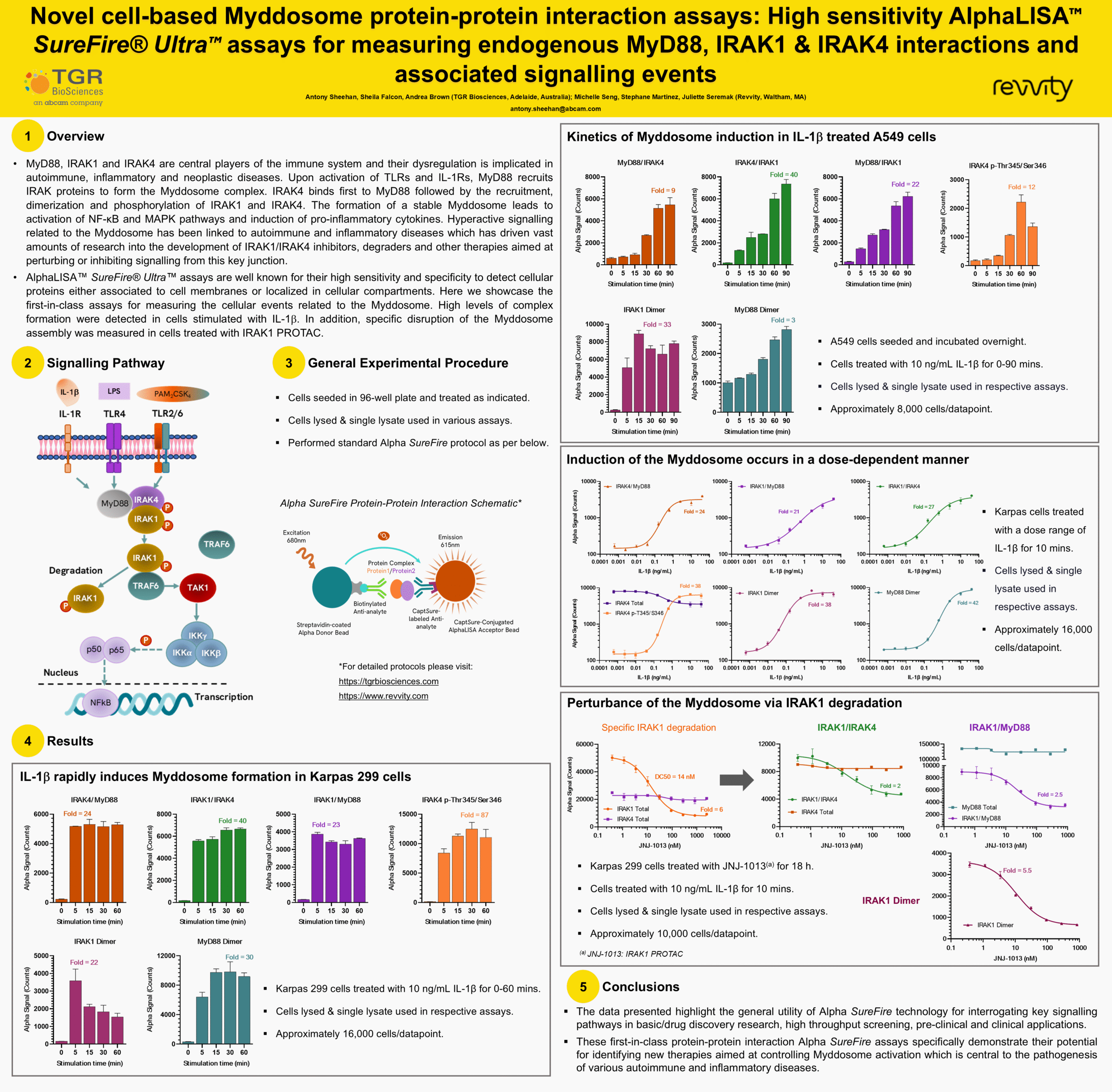
    SureFire® Ultra™ assays for measuring Myddosome protein-protein interactions – SLAS 2026

    MyD88, IRAK1 and IRAK4 are central players of the immune system and their dysregulation is implicated in autoimmune, inflammatory and neoplastic diseases. Upon activation of TLRs and IL-1Rs, MyD88 recruits IRAK proteins to form the Myddosome complex. Hyperactive signalling related to the Myddosome has been linked to autoimmune and inflammatory diseases which has driven vast amounts of research into the development of IRAK1/IRAK4 inhibitors, degraders and other therapies aimed at perturbing or inhibiting signalling from this key junction. SureFire® Ultra™ assays are well known for their high sensitivity and specificity to detect cellular proteins either associated to cell membranes or localized in cellular compartments. Here we showcase the first-in-class assays for measuring the cellular events related to the Myddosome.

  • App Notes

    App Notes

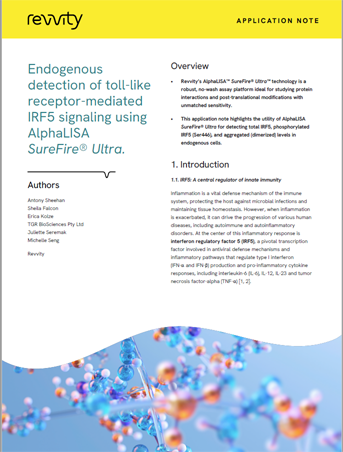
    Endogenous detection of toll-like receptor-mediated IRF5 signaling using AlphaLISA SureFire® Ultra. – Application Note

    Inflammation is a vital defense mechanism of the immune system, protecting the host against microbial infections and maintaining tissue homeostasis. However, when inflammation is exacerbated, it can drive the progression of various human diseases, including autoimmune and autoinflammatory disorders. At the center of this inflammatory response is interferon regulatory factor 5 (IRF5), a pivotal transcription factor involved in antiviral defense mechanisms and inflammatory pathways that regulate type I interferon (IFN-α and IFN-β) production and pro-inflammatory cytokine responses, including interleukin-6 (IL-6), IL-12, IL-23 and tumor necrosis factor-alpha (TNF-α) [1, 2].

  • Poster

    Poster

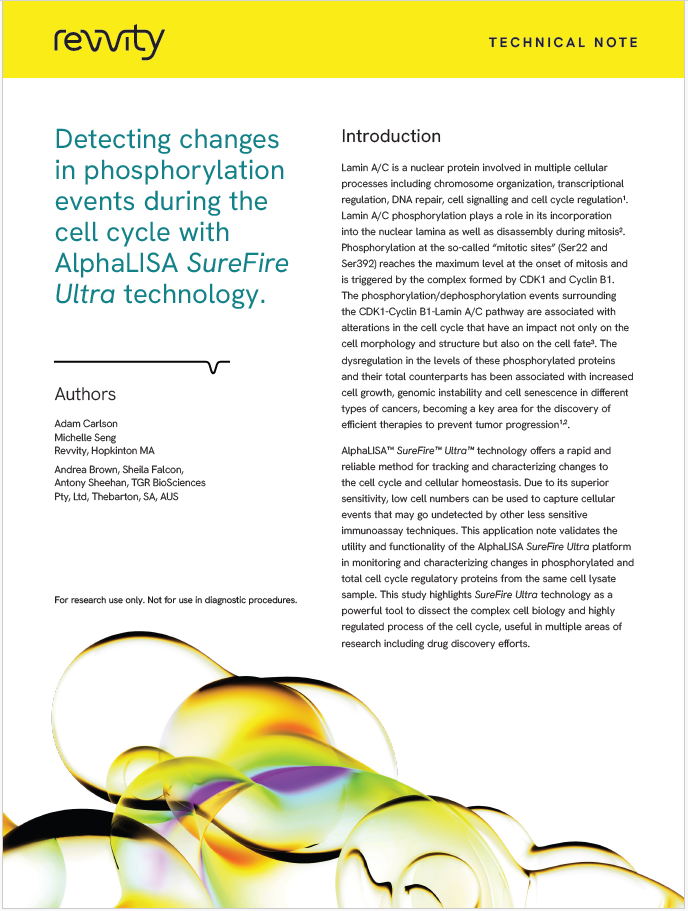
    Detecting changes in phosphorylation events during the cell cycle with AlphaLISA SureFire Ultra technology. – Technical Note

    Lamin A/C is a nuclear protein involved in multiple cellular processes including chromosome organization, transcriptional regulation, DNA repair, cell signalling and cell cycle regulation1. Lamin A/C phosphorylation plays a role in its incorporation into the nuclear lamina as well as disassembly during mitosis2. Phosphorylation at the so-called “mitotic sites” (Ser22 and Ser392) reaches the maximum level at the onset of mitosis and is triggered by the complex formed by CDK1 and Cyclin B1. The phosphorylation/dephosphorylation events surrounding the CDK1-Cyclin B1-Lamin A/C pathway are associated with alterations in the cell cycle that have an impact not only on the cell morphology and structure but also on the cell fate3. The dysregulation in the levels of these phosphorylated proteins and their total counterparts has been associated with increased cell growth, genomic instability and cell senescence in different types of cancers, becoming a key area for the discovery of efficient therapies to prevent tumor progression1,2

  • App Notes

    App Notes

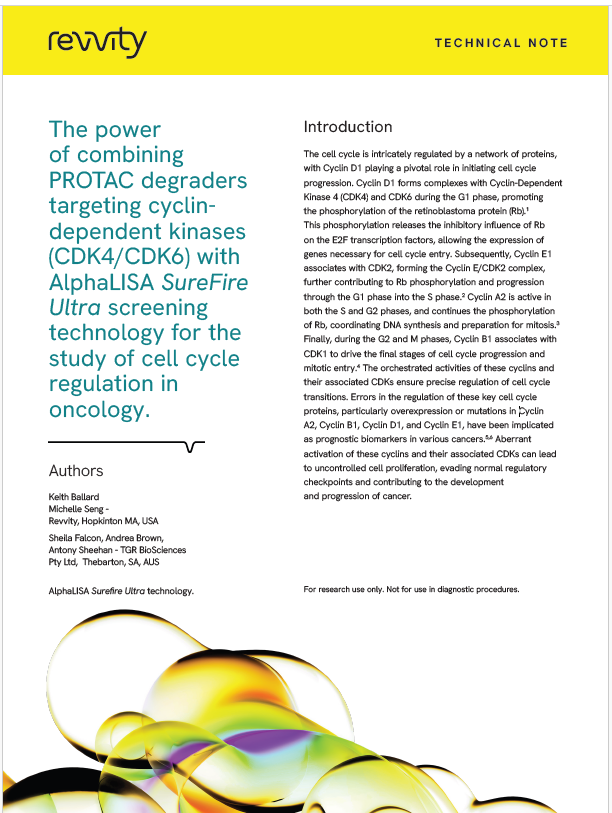
    PROTAC degraders targeting cyclin kinases with AlphaLISA Surefire Ultra screening technology for study of cell cycle regulation in oncology. – Technical Note

    The cell cycle is intricately regulated by a network of proteins, with Cyclin D1 playing a pivotal role in initiating cell cycle progression. Cyclin D1 forms complexes with Cyclin-Dependent Kinase 4 (CDK4) and CDK6 during the G1 phase, promoting the phosphorylation of the retinoblastoma protein (Rb).1 This phosphorylation releases the inhibitory influence of Rb on the E2F transcription factors, allowing the expression of genes necessary for cell cycle entry. Subsequently, Cyclin E1 associates with CDK2, forming the Cyclin E/CDK2 complex, further contributing to Rb phosphorylation and progression through the G1 phase into the S phase.2......

  • App Notes

    App Notes

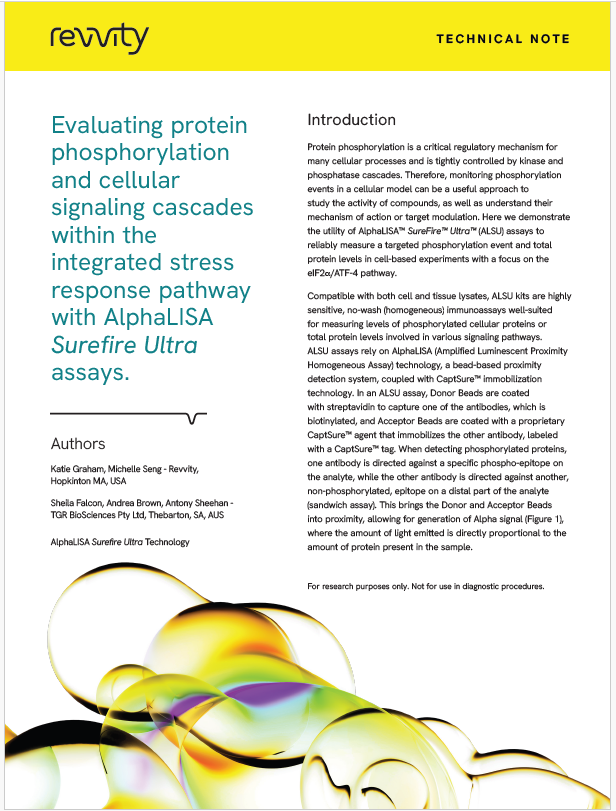
    Protein phosphorylation and cellular signaling cascades within integrated stress response pathway with AlphaLISA SureFire Ultra assays. – Technical Note

    Protein phosphorylation is a critical regulatory mechanism for many cellular processes and is tightly controlled by kinase and phosphatase cascades. Therefore, monitoring phosphorylation events in a cellular model can be a useful approach to study the activity of compounds, as well as understand their mechanism of action or target modulation. Here we demonstrate the utility of AlphaLISA™ SureFire™ Ultra™ (ALSU) assays to reliably measure a targeted phosphorylation event and total protein levels in cell-based experiments with a focus on the eIF2α/ATF-4 pathway. ...