Assay points.
-
ALSU-TST2-A500
500
-
ALSU-TST2-A10K
10,000
-
ALSU-TST2-A50K
50,000
-
ALSU-TST2-A-HV
100
Assay Principle
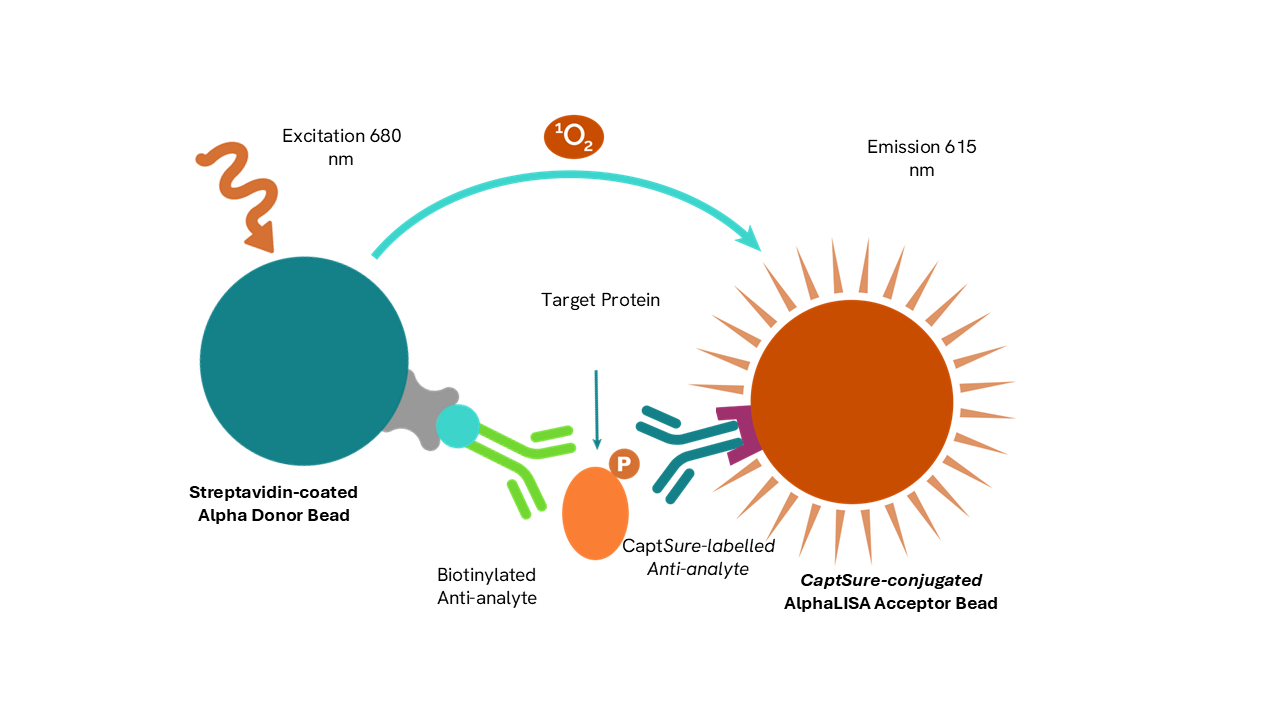
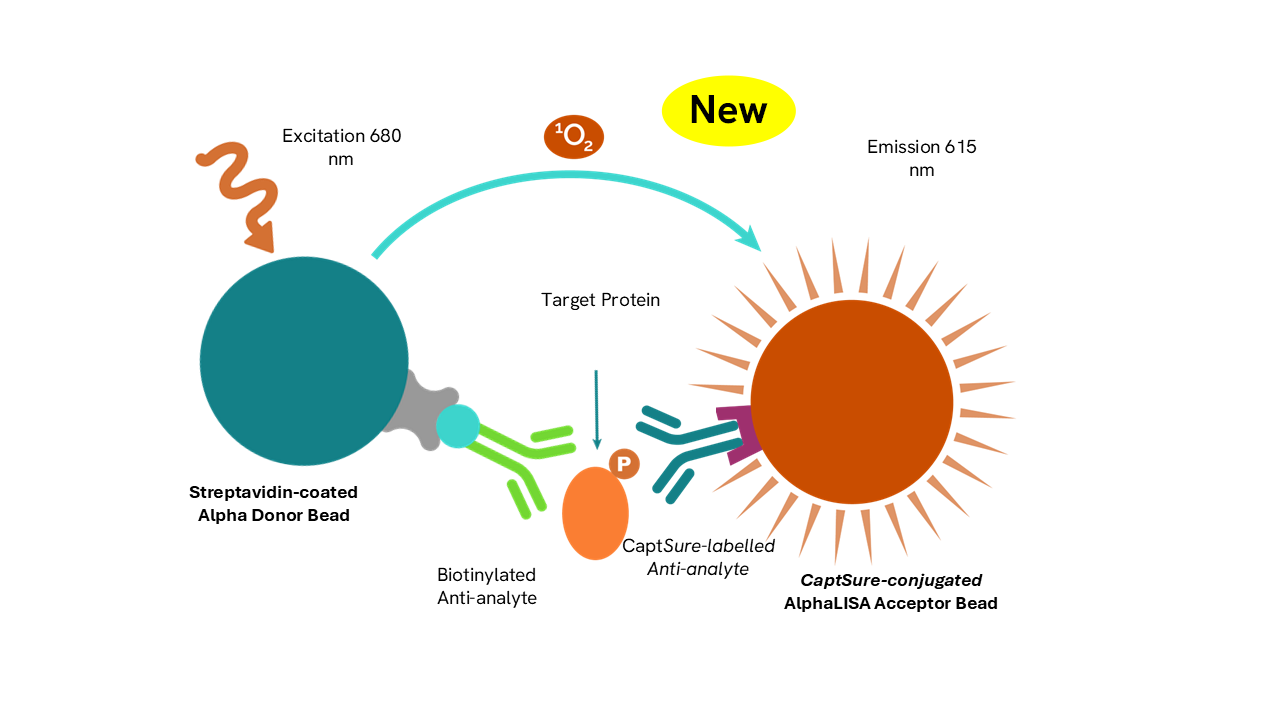
The AlphaLISA™ SureFire® Ultra™ assay enables the rapid and sensitive detection of total and phosphorylated cellular proteins. AlphaLISA™ assays utilize two bead types: Acceptor Beads and Donor Beads. The Acceptor Bead is coated with a proprietary CaptSure™ agent to specifically immobilize the assay specific antibody which is labeled with a CaptSure™ tag. The Donor Bead is coated with streptavidin to capture the biotinylated antibody.
In the presence of a target protein, the two target-specific antibodies bring Donor and Acceptor Beads into close proximity. When the Donor Beads are activated by a laser (680 nm), singlet oxygen is transferred to the Acceptor Bead leading to the production of an Alpha signal. The amount of light emission (615 nm) from the Acceptor Bead is directly proportional to the amount of target protein present in the sample. If an Acceptor Bead is not in close proximity (i.e. 200 nm) of a Donor bead, little to no signal is produced over background.
The assay can be executed in a 1-plate or 2-plate assay protocol (Refer to Manual for more details).
1-plate assay protocol: culturing of cells, treatment, lysis and assay are performed in a single well, enabling miniaturization in high throughput screening programs.
2-plate assay protocol: cells are cultured and treated in a 96-well culture plate and lysates are then transferred into a separate plate for assay. This format allows the evaluation of multiple targets from a single lysate.
Technical Specific Data
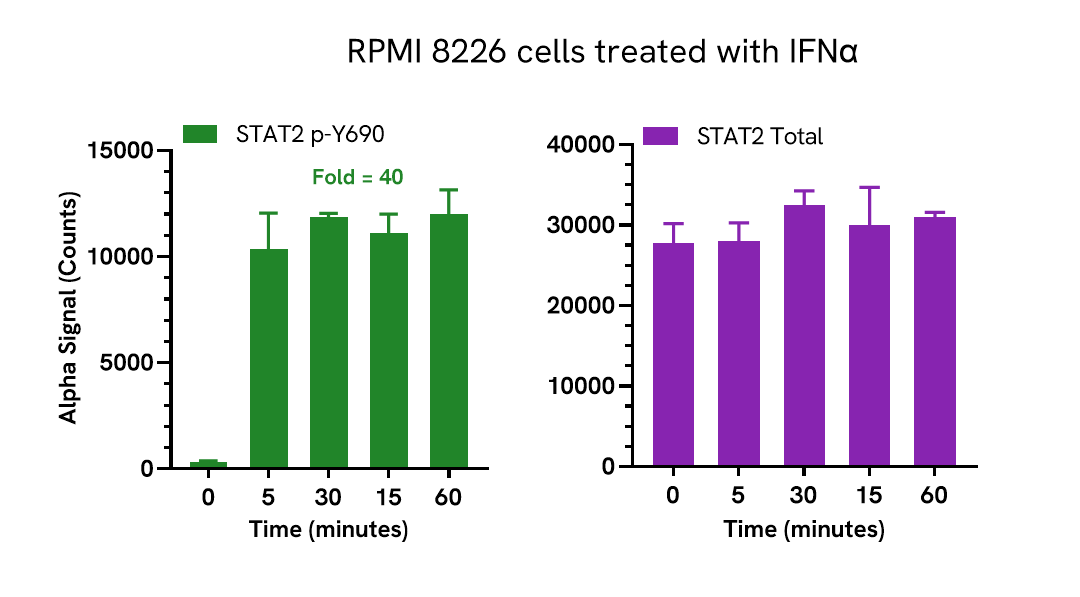
Data obtained with a 2-plate, 2-incubation protocol. RPMI 8226 cells were harvested, seeded in a 96-well plate at 200K cells/well and treated with 10 ng/mL IFNα at the indicated timepoints. Cells were washed, lysed with Lysis Buffer and assayed separately for Phospho (Tyr690) and Total STAT2 using respective SureFire® Ultra™ kits. Equivalent to approximately 20,000 cells/datapoint.
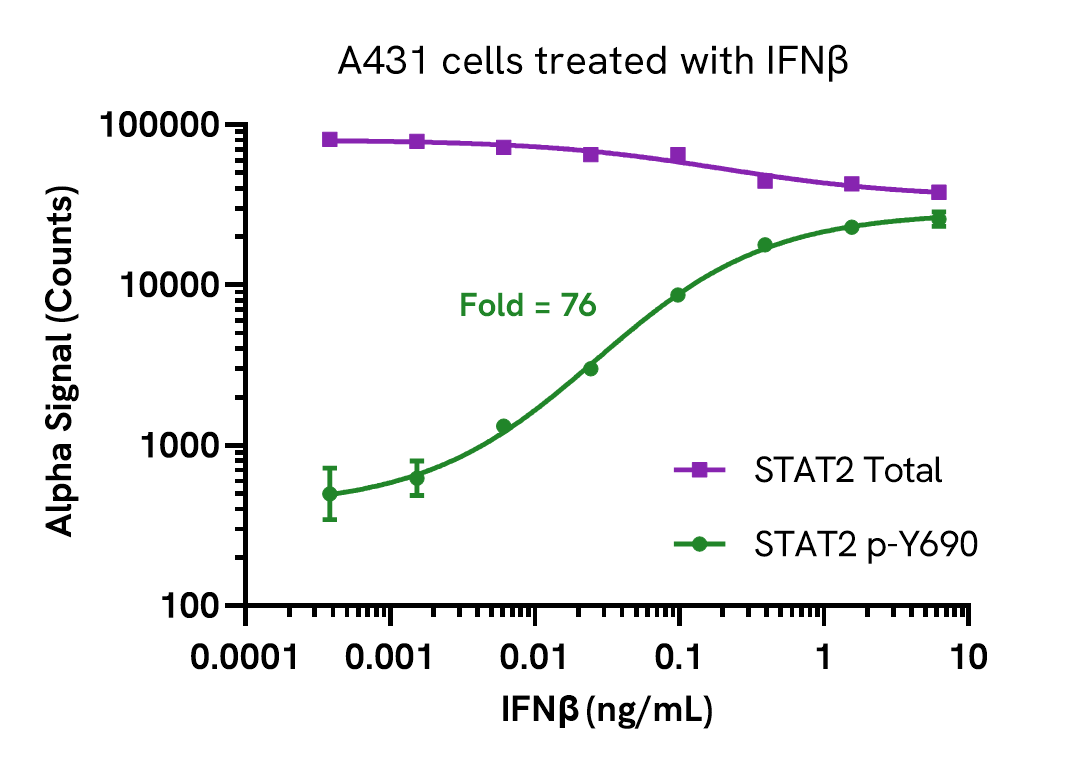
Data obtained with a 2-plate, 2-incubation protocol. A431 cells were seeded at 60K cells/well in a 96-well plate and incubated overnight. Cells were treated with IFNβ at the indicated concentrations for 30 minutes. Cells were lysed with Lysis Buffer and assayed separately for Phospho (Tyr690) and Total STAT2 using respective SureFire® Ultra™ kits. Equivalent to approximately 6,000 cells/datapoint.
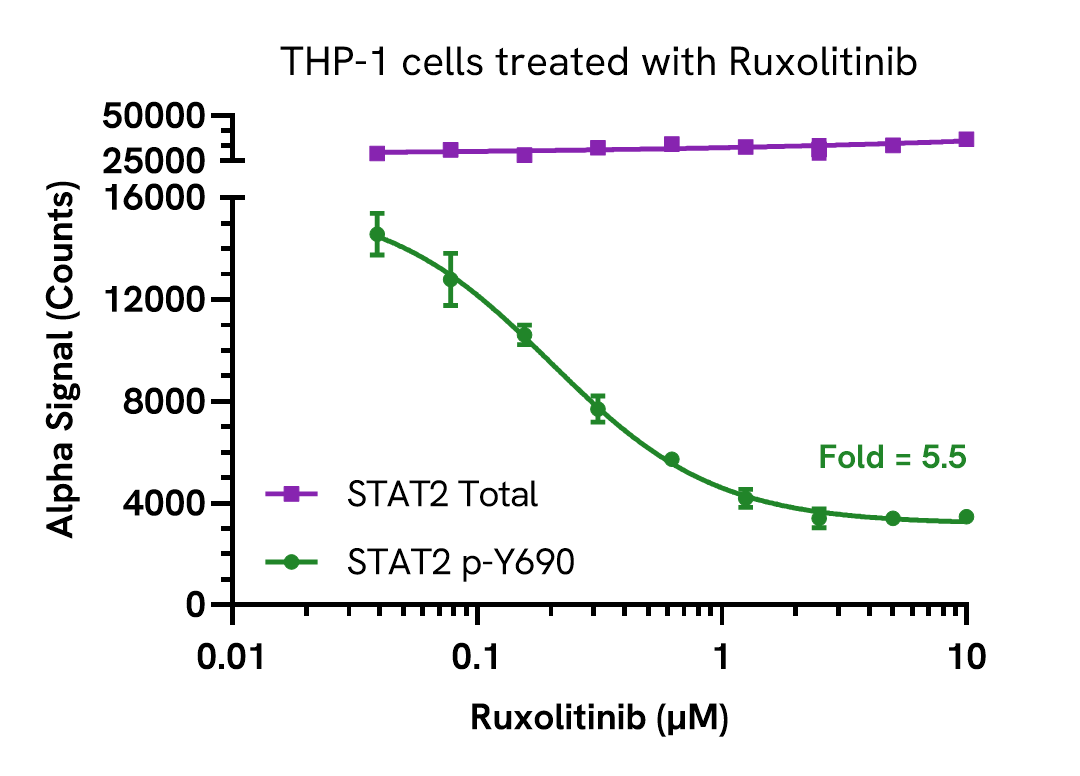
Data obtained with a 2-plate, 2-incubation protocol. THP-1 cells were seeded at 200K cells/well in a 96-well plate with HBSS containing 10 ng/mL IFN β for 15 minutes. Cells were then treated with the JAK inhibitor, Ruxolitinib at the indicated concentrations for 1 hour. Cells were lysed with Lysis Buffer and assayed separately for Phospho (Tyr690) and Total STAT2 using respective SureFire® Ultra™ kits. Equivalent to approximately 20,000 cells/datapoint.
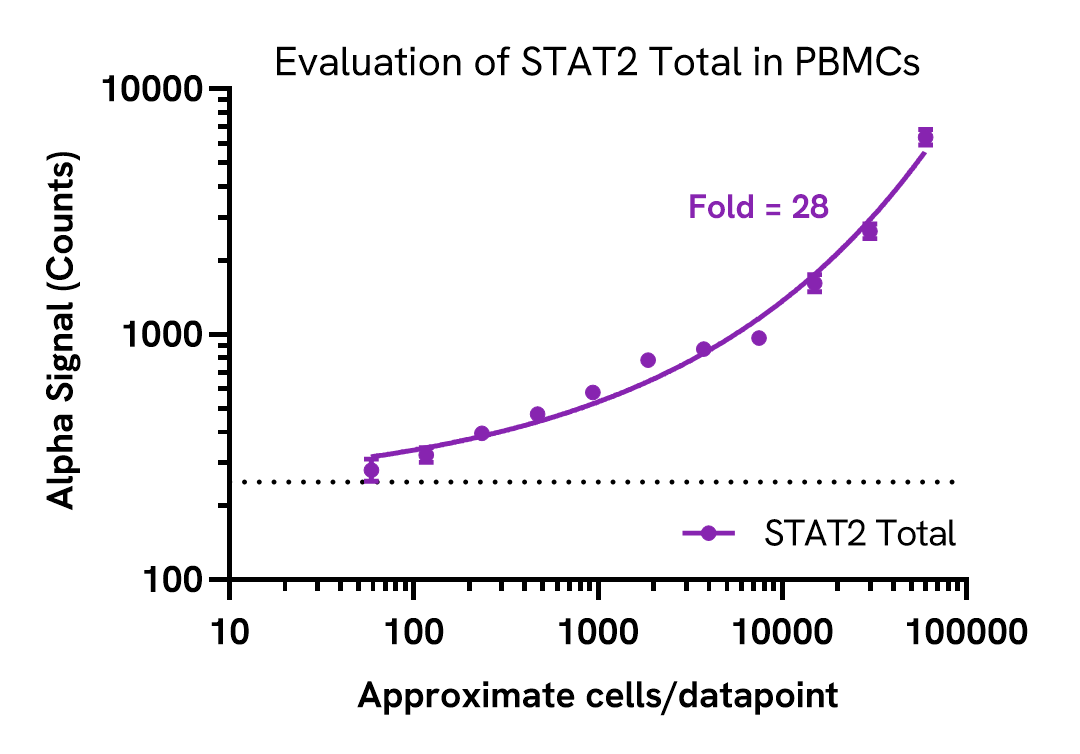
Peripheral Blood Mononuclear Cells (PBMCs) were isolated from healthy donors using Ficoll Plaque Plus (Merck, GE17-1440-02). PBMCs were lysed with Lysis Buffer at 6 x 10⁶ cells/mL. Generated lysate was serially diluted in Lysis Buffer and evaluated for STAT2 Total levels using the SureFire® Ultra™ kit. Lysate dilution starts with approximately 60,000 cells/datapoint.
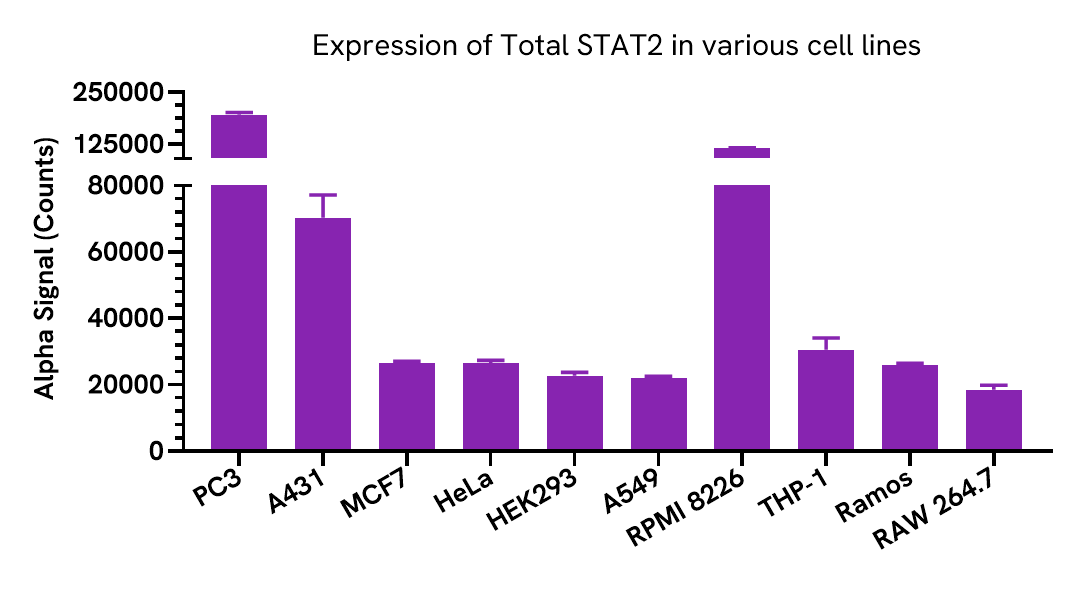
Data obtained from measurement of STAT2 in various cell types lysed with Lysis Buffer. Equivalent to approximately 5,000 cells/datapoint (adherent cells) or 16,000 cells/datapoint (suspension cells).
Manuals & downloads.
-
PDF
-
PDF
Detection Kit Manual
-
Tech Spec
Technical Data Sheet
Safety Data Sheets
-
Safety Data Sheet (SDS)
Safety Data Sheet EU-EN
-
Safety Data Sheet (SDS)
Safety Data Sheet US